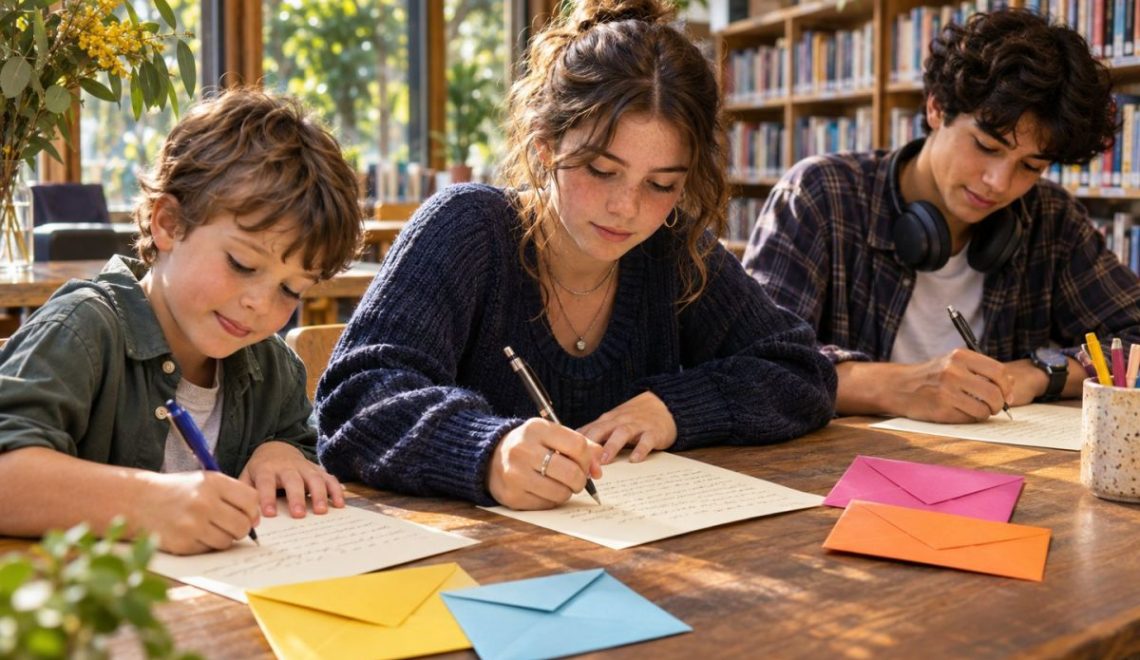
Ask a child to fill a page and you might get a long stare. Ask what they’d tell their favourite book character, or what they hope their future self remembers, and you might get an answer before you’ve found a pen. A letter gives young writers someone to talk to and a reason to keep going.
These ten activities work at home, in a classroom or at a youth group. For World Letter Writing Day on 1 September, try one that ends with an actual delivery. A note tucked into a lunchbox counts.
Start with a greeting and one good sentence
All you need is paper and something to write with. Ask, “Who will read this?” and “What’s the one thing you want to tell them?” Then add a greeting, a message and a sign-off. Younger children can draw, label or dictate their message. Teenagers can choose their own audience and decide whether to share the finished letter.
1. Set up a classroom or family postbox
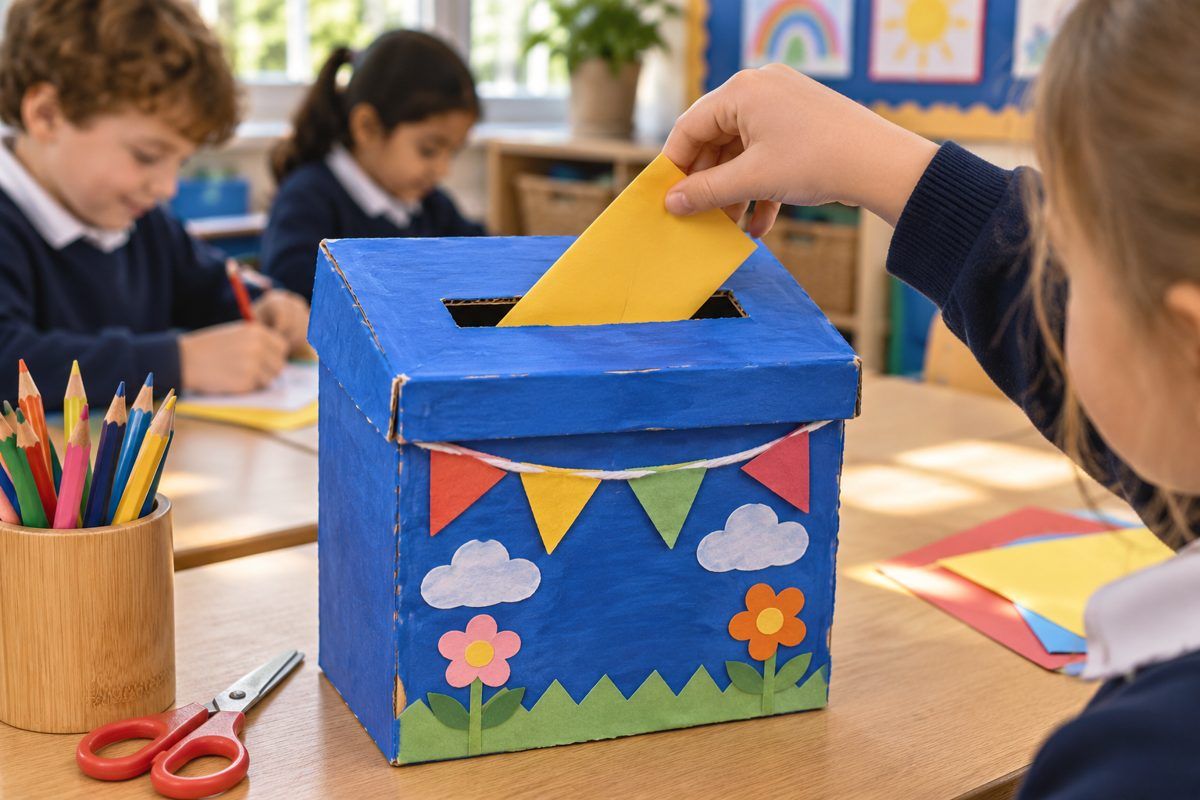
Cut a slot in a shoebox and choose a time to deliver the mail. Start with notes to people who have agreed to join in. For a group, pair writers or assign recipients so everyone receives something. Whoever gets a note can write back with an answer and a new question.
Try this: “If you could teach me one thing in ten minutes, what would it be?”
2. Write a thank-you that tells a story
Choose someone who made an ordinary day better. Think of one small thing they did and explain what it meant. A child could thank a cousin who helped with a puzzle. A teenager could thank someone who made them feel welcome when they joined a new team.
Try this: “I still remember when you … It mattered to me because …”
3. Send a letter to your future self

Pick an opening date, perhaps the first day of next term or a year from now. Write about one ordinary detail you’d like to remember, one thing you’re learning and one question for the person you’ll be. Seal the envelope, write the opening date on it and put it somewhere you’ll find it again.
Try this: “Here’s what a normal Saturday looks like for me right now. I wonder what yours looks like.”
4. Post a card from an imaginary place
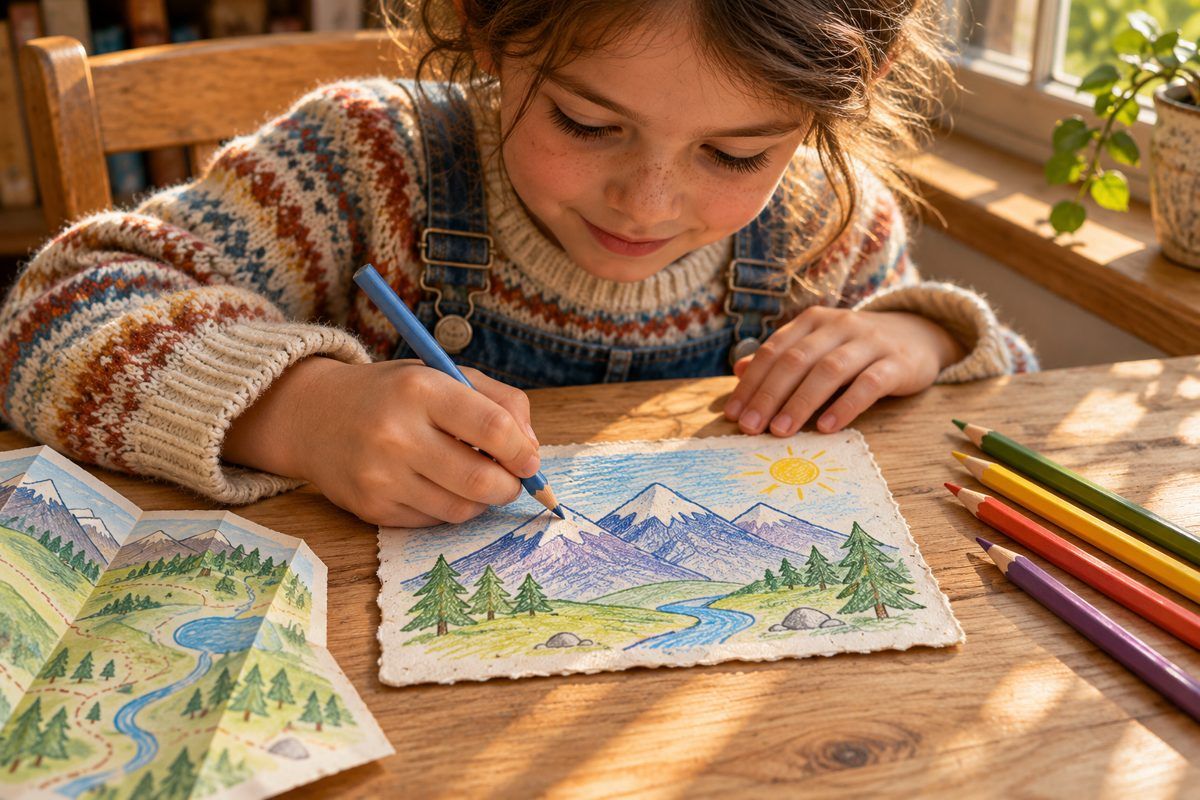
Choose somewhere real or invent a place. Draw the view on one side of a card, then write a message on the other. Include a sound, a surprising detail and something you wish the recipient could see. Older writers can pick an ordinary place and describe it so vividly that the reader could picture standing there.
Try this: “You’d love the market here. Every time the wind blows, the stallholders have to catch their hats.”
5. Write to a character at a turning point
Pause a book, film or game at a moment when someone has a tricky choice to make. Write to the character before you find out what happens. Offer advice and ask one question. Then try answering in their voice. A teenager can pick a character they disagree with and see whether writing the reply changes their mind.
Try this: “Before you open that door, there’s something I think you should know.”
6. Collect words for a letter
Take a short walk and jot down words from signs or labels. At home, use words from old magazines or packaging. Pick three and weave them into a letter about the day. Younger children can use the words as labels on a drawing. Older writers can challenge themselves to use the same three words in two letters with completely different moods.
Try this: Use orange, slow and open in a note to someone who’s never visited your neighbourhood.
7. Send a recipe to an imaginary customer
Invent a dish for a very particular diner, such as a cloud that’s tired of eating rain. In a letter, explain why the recipe suits them, list what they’ll need and write the steps in order. Swap letters and see if the reader can draw the finished dish from your instructions.
Try this: “Dear Cloud, here’s how to make toast you can eat while floating over the ocean.”
8. Pass a story through the post
The first writer sends a message about something unexpected. The next writer answers as the recipient and adds a new clue. Keep going for three or four letters. Teen groups can try giving each writer a secret motive or letting two characters remember the same event differently.
Try this: “I found your letter taped under the library table. How did you know I’d sit there?”
9. Make a comic that starts with an envelope
Draw three panels showing someone finding, opening and reacting to a letter. Write the short message that goes inside the envelope. Swap comics with a partner and ask them to write the recipient’s reply. Compare how each of you read the expression in the final panel.
Try this: Draw the same message twice. Give it to a delighted recipient in one comic and a suspicious recipient in the other.
10. Write a letter that asks for a change
Pick something close to home, such as where the school keeps its sports gear or what the local library could offer teens. Write to someone who could help. State what you’d like to change, explain why it matters and suggest a practical first step. If you plan to send it, read it aloud first to hear how it might land with the recipient.
Try this: “Could we trial a quiet lunch space once a week? Here’s how we could start.”
Give the letter somewhere to go
Hand it to someone, pop it in the classroom postbox or ask an adult to help address and post it. A private letter can go into a drawer for later. If you’re writing with children or teenagers, let them decide what they’re comfortable sharing. For a first try, pick a person, write three lines and see what happens when they open the envelope.
Activity inspiration from Literacy Ideas’ guide to fun writing activities.