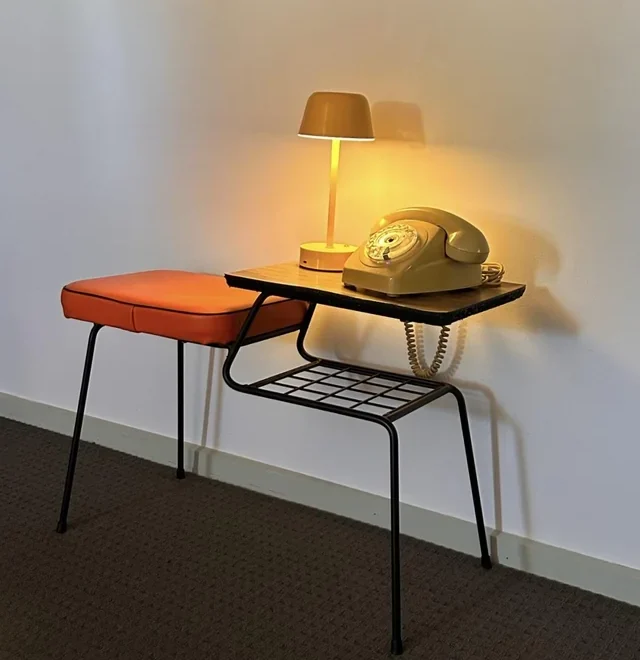
Remember when the phone rang and you had absolutely no idea who was calling?
Someone would shout, “I’ll get it!” Footsteps would race down the hallway. There might be a brief negotiation over who the call was actually for, followed by a voice calling through the house: “Mum! It’s for you!”
The family landline phone had a way of making a conversation everyone’s business.
There were tangled cords, scraps of paper covered in messages and strict instructions about how long you could spend talking. Privacy sometimes meant stretching the handset around a doorway and hoping nobody needed to walk past.
It wasn’t always convenient. But it gave us something worth thinking about: a phone whose main purpose was to connect us with another person.
Could a little of that simplicity belong in our lives again?

The landline phone was part of the household
For anyone who grew up with a home phone, the memories can be surprisingly vivid.
Perhaps yours sat on a small table beside an address book. Perhaps it was attached to the kitchen wall, close enough for whoever was cooking dinner to answer with one hand.
You might remember a grandparent calling on Sunday, a school friend ringing to discuss homework, or the particular embarrassment of a parent answering a call from someone you liked.
The phone became woven into the routines of home.
And when someone rang just to ask how you were, there was room for an ordinary conversation. What had happened that day. What was for dinner. Something funny the dog had done.
Nothing especially newsworthy. Everything that makes up a life.
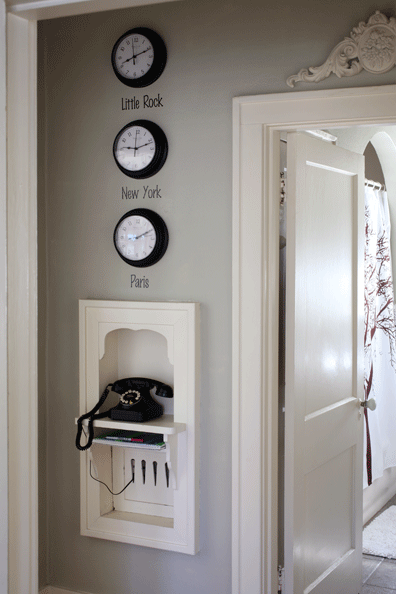
When checking the time becomes twenty other things
Our smartphones are useful. They help us navigate unfamiliar places, take photographs, organise work and stay close to people who live far away.
They also make it remarkably easy to lose track of what we picked them up to do.
You check the time, notice a message, open an email and follow a headline. A few minutes later, you are looking at something you never intended to see.
Meanwhile, the book remains unopened. The cup of tea goes cold. Someone beside you is waiting to finish their story.
A landline phone offers an interesting contrast. It rings, you answer, you talk. When you hang up, there is no feed waiting underneath the conversation.
That small boundary is part of its appeal.
Could a home phone support more screen-free family time?
A home phone won’t automatically change anyone’s habits. But the idea behind it raises a useful question: could we make ourselves available to people without keeping every app within reach?
For some households, a dedicated home phone might be worth considering. For others, the practical answer could be leaving mobiles in a set place during dinner or agreeing to put them away when visitors arrive.
The aim is to create space for attention.
Children can practise greeting a relative and asking about their day. Friends can have a conversation without someone checking a notification halfway through. Families can enjoy an evening in which the phone has a place, rather than travelling from room to room with its owner.
There is no need to recreate an entire childhood household. Most of us would happily leave the arguments over the phone bill behind.
We can simply choose the parts that still make sense.

The appeal of a retro phone in a modern home
There is something cheerful about a telephone with a proper handset.
A colourful push-button model, a sculptural vintage design or a familiar rotary dial can bring personality to a hallway or home office. For people drawn to retro home decor, an old telephone can be a small object with a great deal of character.
Sometimes it carries a family story, too.
“That was your grandmother’s phone” is a more interesting introduction than most household objects receive.
If you want a vintage telephone to work, check compatibility with your current service before buying. An attractive old handset may need specialist equipment or adaptation.
A decorative phone can still become a conversation starter. It might even prompt someone to tell a story you have never heard before.
What home phones and handwritten letters have in common
At World Letter Writing Day, we celebrate the thought that goes into reaching out.
A handwritten letter begins with a decision to spend time with someone in mind. You choose your words, remember a shared experience and ask a question you genuinely want answered.
An unhurried phone call can offer a similar kind of attention.
One lets us hear a familiar laugh. The other gives us words we can keep and read again.
They can work beautifully together. A conversation brings up an old memory; a letter arrives later with a photograph and the words, “I found this after we spoke.”
Neither needs to be reserved for an anniversary or major announcement. Everyday affection is reason enough.

Bring back a little of the home-phone feeling
You don’t need to install a landline to try a slower way of connecting.
Call someone when you have time to listen. Ask a relative what they remember about their first home phone. Put your mobile away while you write a postcard.
Or open your address book and choose someone you have been meaning to contact.
Write about the kitchen where you used to sit and talk. The friend who always rang after school. The familiar voice that answered before you had even introduced yourself.
You could begin with a simple question:
“Do you remember when we used to spend hours on the phone?”
The landline gave many of us a place to pause and talk. A letter can give us another.
The Step-Back Phone: One Simple Change That Could Help You Live a Less Stressful Life
Meet Ciay: Guest Writing, Fresh Ideas and Stories That Connect