In a world where messages are sent in milliseconds, songs are streamed instantly, and attention spans are constantly fragmented by notifications, something unexpected is happening. According to the Recording Industry Association of America, vinyl sales have grown for the 19th consecutive year, officially passing $1 billion for the first time since 1983. At the same time, handwritten letters are quietly making a return. Younger generations—particularly Gen Z and Millennials—are turning backwards, not out of nostalgia alone, but out of necessity.
According to the Recording Industry Association of America, vinyl sales have grown for the 19th consecutive year, officially passing $1 billion for the first time since 1983.
Vinyl records are spinning again. Handwritten letters are being sealed and sent. Record stores are bustling. Stationery shops are thriving. And at the heart of it all is a powerful cultural shift: the rise of slow communication.
This movement isn’t about rejecting technology entirely. It’s about reclaiming intention, presence, and meaning in how we connect—with music, with others, and with ourselves.
The Fast World We’re Trying to Escape
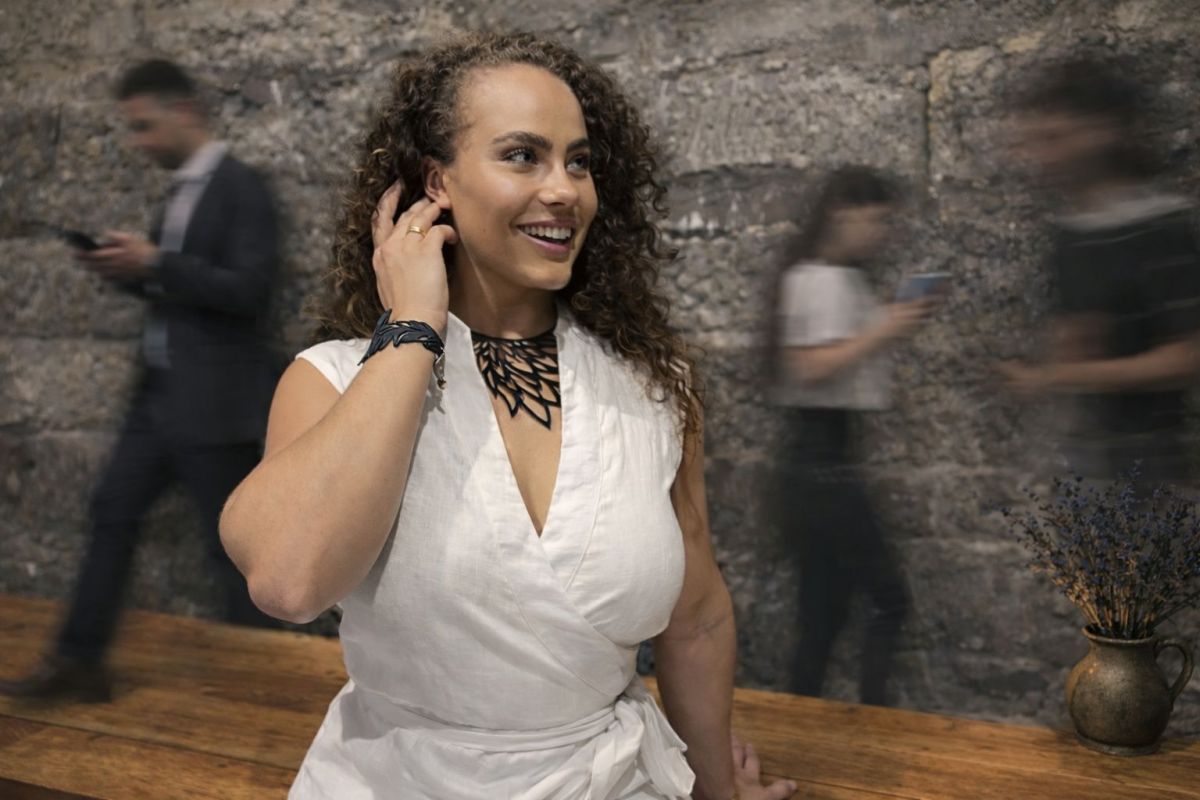
To understand why vinyl and letter writing are resurging, we need to look at what people are stepping away from.
We live in a hyper-digital environment:
- Messages are instant but often shallow
- Music is limitless but often disposable
- Social media is constant but rarely fulfilling
Communication has become efficient—but efficiency isn’t the same as connection.
A text message can be read and forgotten in seconds. A Spotify playlist can play for hours without leaving a lasting impression. Everything is fast, frictionless, and fleeting.
And increasingly, people are asking: What’s missing?
The Vinyl Revival: Music You Can Hold
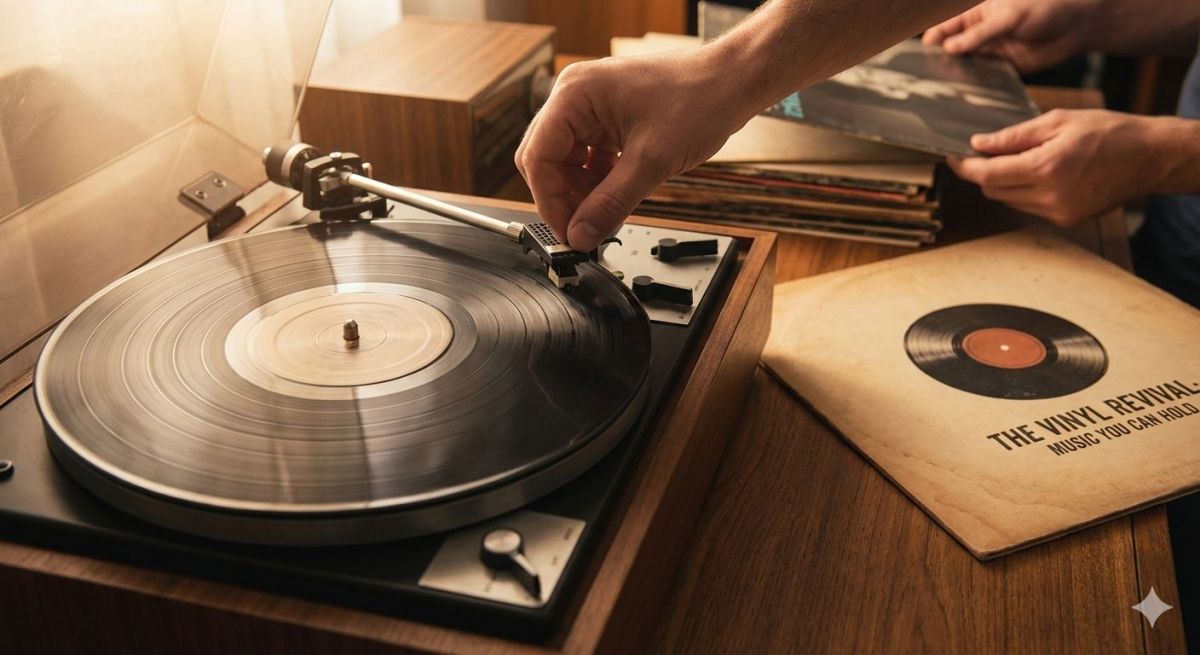
Vinyl records are no longer a niche hobby. They are a full-scale cultural comeback.
For nearly two decades, vinyl sales have grown year after year. In fact, vinyl has already surpassed CD sales—something that hadn’t happened since the late 1980s. Millions of records are now being sold annually, and much of that growth is driven by younger listeners.
But why would someone choose a format that requires effort in an age of convenience?
1. The Ritual of Listening
Playing a vinyl record is not passive. It’s intentional.
You take the record out of its sleeve.
You place it carefully on the turntable.
You lower the needle.
And then—you listen.
There’s no skipping tracks with a swipe. No algorithm deciding what comes next. You engage with the music as a complete experience, just as the artist intended.
That ritual creates presence. And presence creates meaning.
2. The Sound Experience
Vinyl enthusiasts often talk about the “warmth” of analogue sound—the subtle imperfections, the crackle, the depth. Whether or not it’s objectively superior, it feels different.
It feels alive.
And in a digital world where everything is polished and compressed, that rawness is part of the appeal.
3. Music as Art, Not Just Audio
Vinyl records are not just about sound—they’re about visuals and storytelling.
Large-format album covers
Detailed liner notes
Limited-edition pressings
Coloured vinyl variations
Artists like Taylor Swift, Harry Styles, and Billie Eilish have embraced this fully, releasing multiple collectible versions of the same album.
Owning a record becomes more than listening—it becomes collecting, curating, and connecting.

4. Community and Culture
Record stores have become cultural hubs again.
Events like Record Store Day draw crowds, not just for music, but for connection. People browse, talk, discover, and share recommendations face-to-face.
In a time when so much interaction is online, these physical spaces offer something rare: real human connection.
The Letter Writing Renaissance: Words That Last
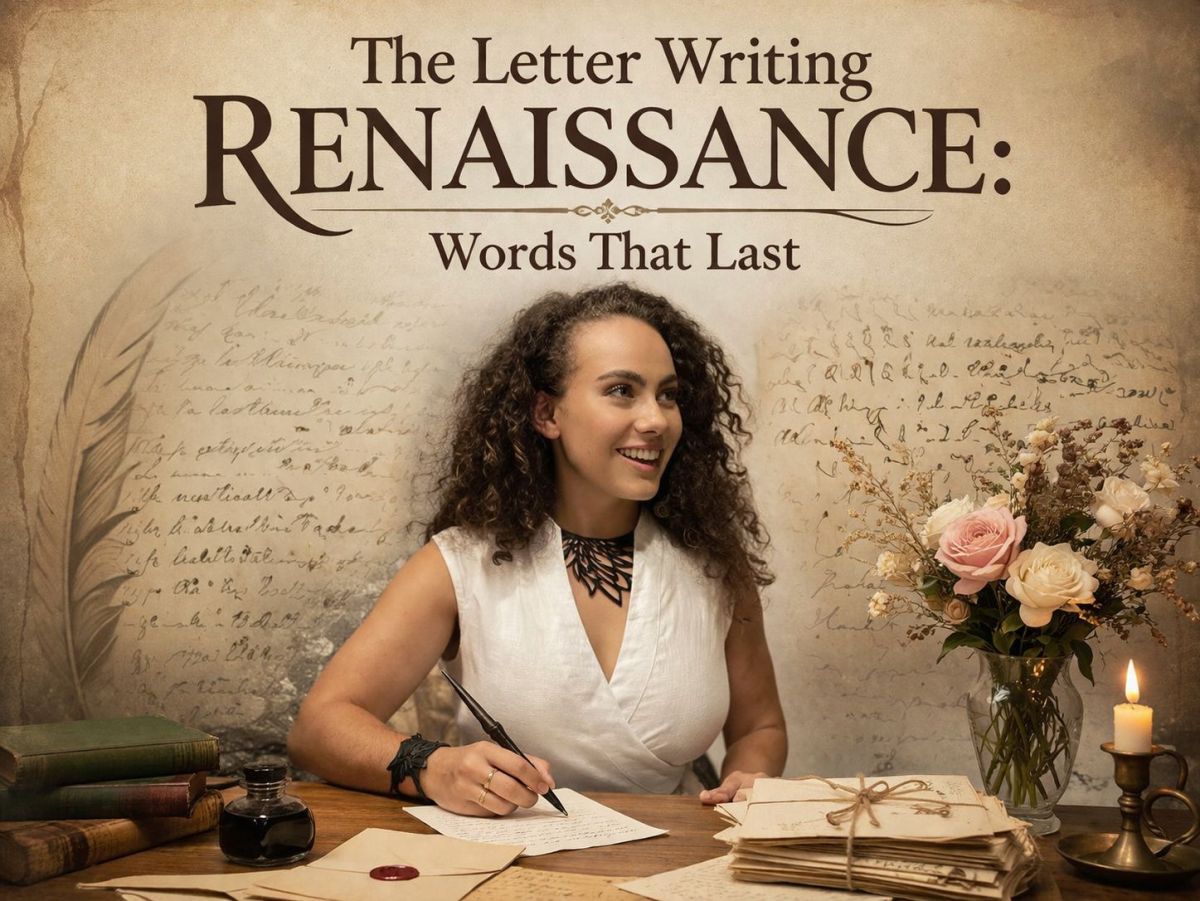
At the same time vinyl is resurging, another analogue tradition is quietly making a comeback—letter writing.
What was once considered outdated is now being rediscovered as meaningful, creative, and deeply personal.
1. A Break from Digital Noise
Writing a letter requires you to slow down.
There are no notifications interrupting you. No autocorrect fixing your thoughts. No pressure to respond instantly.
You sit. You think. You write.
And in doing so, you create something far more intentional than a text message or email.
2. The Power of Tangibility
A handwritten letter is something you can hold.
You can feel the paper. See the ink. Notice the handwriting—the imperfections, the personality.
It becomes a physical extension of the person who wrote it.
Unlike a message that disappears in a chat thread, a letter can be kept, revisited, and treasured for years.
3. Thoughtfulness and Depth
When you write a letter, you naturally say more.
You reflect. You choose your words carefully. You share stories, emotions, and details that would never make it into a quick message.
The delay—the time it takes to send and receive—actually enhances the experience. It builds anticipation and makes the connection feel more meaningful.
4. Creativity and Self-Expression
Letter writing has evolved into an art form.
People are embracing:
- Calligraphy
- Wax seals
- Illustrated envelopes
- Custom stationery
Platforms like TikTok and Pinterest have amplified this trend, showcasing beautifully crafted letters that inspire others to try it themselves.
It’s not just communication—it’s creativity.
5. The Return of Pen Pals
Another fascinating aspect of this revival is the resurgence of pen-palling.
Strangers from different parts of the world are forming connections through handwritten letters—slowly building friendships over time.
In a world of instant “follows” and fleeting interactions, these relationships feel refreshingly genuine.
The Shared Drivers: Why These Trends Are Happening Together
At first glance, vinyl records and letter writing might seem unrelated. One is about music, the other about communication.
But at their core, they are driven by the same cultural forces.
1. Digital Detox
People are overwhelmed.
Constant notifications, endless scrolling, and the pressure to always be “on” have created a desire to disconnect—even temporarily.
Both vinyl and letter writing offer that escape.
They require focus. They reward stillness.
2. The Need for Tangibility
We live in a world where most things are intangible:
- Music is streamed
- Photos are stored in the cloud
- Conversations happen on screens
Vinyl and letters bring things back into the physical world.
You can hold them. Display them. Keep them.
They exist beyond the digital realm.
3. Nostalgia—Even for Times We Didn’t Live Through
Interestingly, much of this movement is driven by people who didn’t grow up with these technologies.
For Gen Z, vinyl and handwritten letters feel new, even though they are old.
They represent a simpler, more intentional way of living—something that feels appealing in contrast to modern chaos.
4. Slowing Down Time
Both trends encourage a different relationship with time.
Streaming is instant. Messaging is instant.
But vinyl requires you to sit with an album.
Letter writing requires patience.
This slowing down creates space—for reflection, for emotion, for connection.
A Cultural Shift: From Consumption to Experience

What we’re seeing is more than a trend. It’s a shift in values.
People are moving away from:
- Convenience → toward intention
- Speed → toward depth
- Quantity → toward quality
Listening to music becomes an experience, not background noise.
Communication becomes meaningful, not transactional.
This shift is redefining how younger generations engage with the world.
The Role of Social Media (Ironically)
While this movement is about stepping away from digital life, social media has played a surprising role in accelerating it.
Platforms like TikTok and Instagram have:
- Showcased aesthetic vinyl setups
- Popularised “study with me” and slow living content
- Highlighted beautifully crafted letters and stationery
In a way, digital platforms are inspiring analogue behaviours.
It’s a paradox—but an effective one.
Vinyl Lettering: A Parallel Creative Trend
Alongside these movements, there’s another “vinyl” trend gaining traction—vinyl lettering.
This refers to custom adhesive vinyl used for:
- Decorating laptops and water bottles
- Creating home décor
- Designing small business signage
While different in nature, it shares the same underlying appeal: creativity, personalisation, and hands-on expression.
It’s another example of people wanting to make, not just consume.
What This Means for the Future
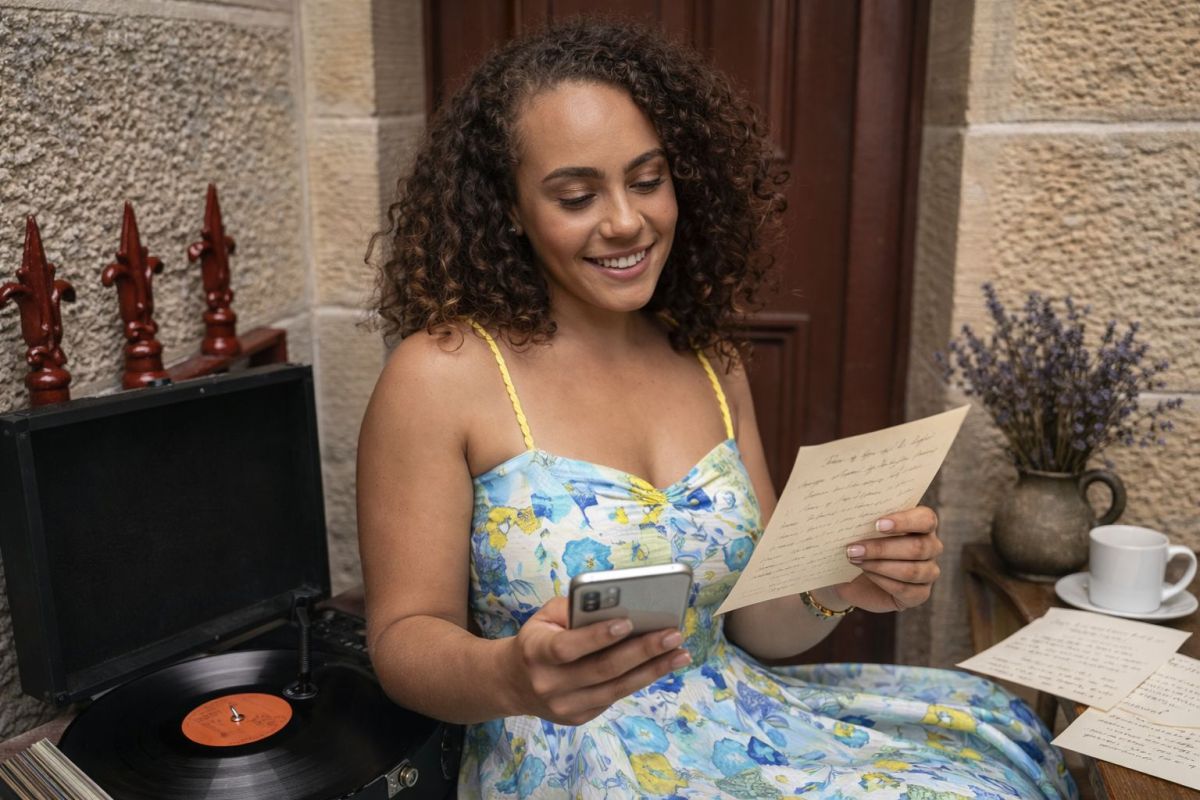
The resurgence of vinyl and letter writing suggests something important:
Technology hasn’t replaced our need for connection—it’s just changed how we seek it.
And now, people are recalibrating.
We’re not abandoning digital tools. But we’re learning to balance them with analogue experiences that feel more human.
This “slow communication” movement is likely to continue growing, influencing everything from:
- How we consume media
- How we communicate
- How we design our daily lives
Why It Matters
At its core, this movement is about reclaiming meaning.
It’s about:
- Listening with intention
- Writing with care
- Connecting with depth
In a fast world, choosing to slow down is a radical act.
And perhaps that’s why vinyl records are spinning again, and handwritten letters are finding their way back into our lives.
A Final Thought
There’s something powerful about holding a record in your hands as the needle drops, or opening a letter that someone took the time to write just for you.
These moments remind us that connection doesn’t need to be instant to be meaningful.
In fact, sometimes the slower it is—the more it matters.
And if you find yourself inspired by this return to slower, more intentional living… maybe it’s time to sit down, put pen to paper, and write to someone about it.
Going Analogue in 2026: The Letter Writing Renaissance Fueling the Digital Detox Movement